


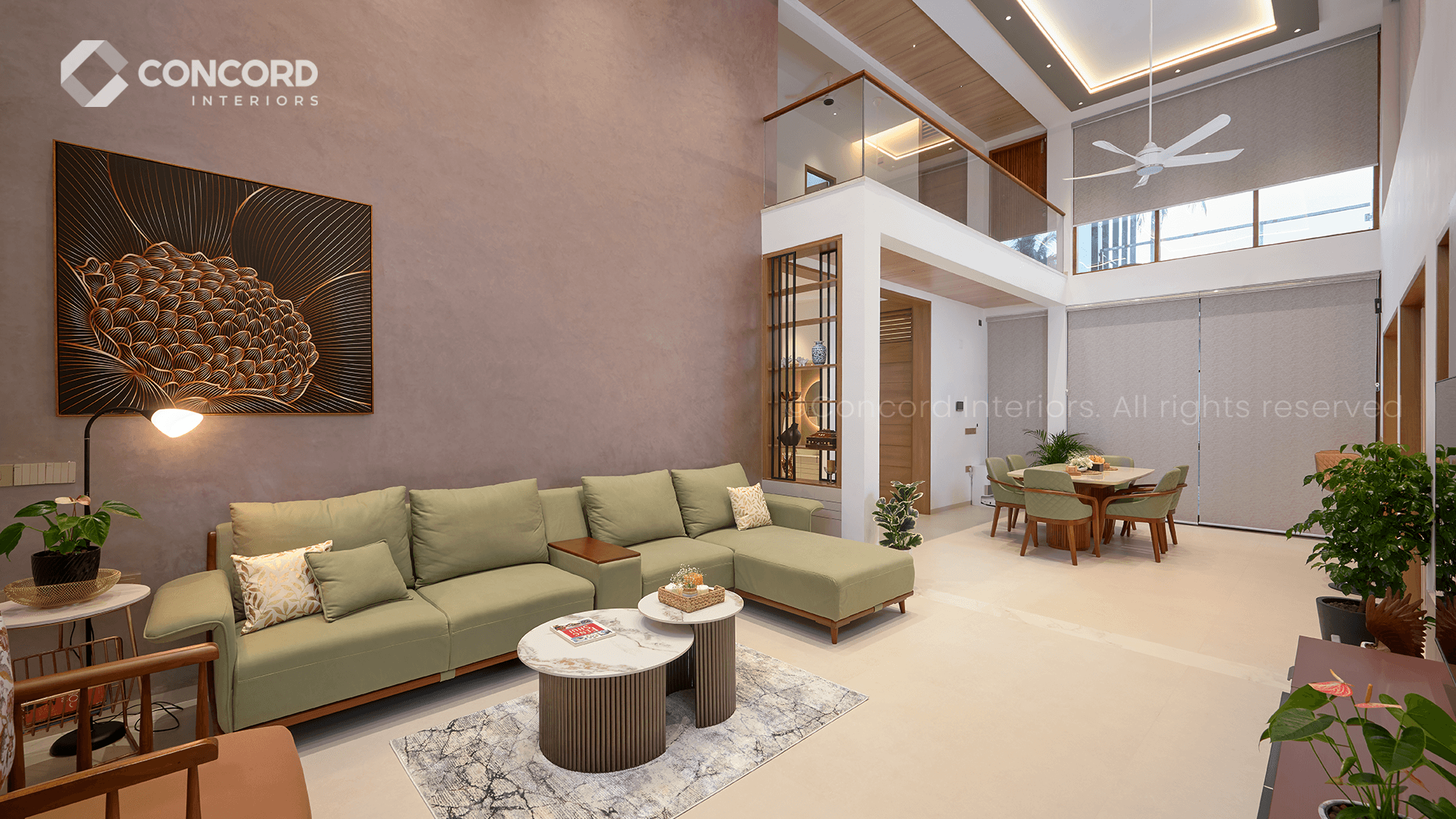
Colour influences how large a room appears more than most homeowners realize. Dark walls can create drama and intimacy, but lighter tones generally make spaces feel brighter and more expansive.
Soft beige, warm white, greige, muted taupe, and light earth-inspired shades remain popular choices for contemporary interiors. These colours reflect natural light and create a seamless visual flow throughout the room.
Using a consistent palette across walls, furniture, and larger design elements also prevents unnecessary visual breaks that can make a room feel smaller.
One of the most common mistakes in small living room design is selecting furniture that overwhelms the available space. Large sectional sofas and oversized coffee tables may look appealing in a showroom, but they can dominate a smaller room and restrict movement. Furniture with slimmer profiles, exposed legs, and clean lines generally creates a lighter visual presence. The goal is to strike a balance between comfort and proportion. A room should feel furnished, not crowded.
Natural light has an extraordinary impact on how a room feels. Bright spaces naturally appear larger, fresher, and more welcoming.
Heavy window treatments often block valuable daylight. Many designers now favour sheer curtains, lightweight fabrics, and layered window treatments that allow sunlight to enter while maintaining privacy. Where natural light is limited, carefully planned artificial lighting can help create a similar sense of openness and warmth.
Mirrors continue to be one of the most effective tools for visually expanding interior spaces. They reflect light, increase brightness, and create the perception of greater depth. A large mirror positioned opposite a window can dramatically alter how spacious a room appears. Decorative mirror installations can also function as statement design features while serving a practical purpose. Many successful luxury living room ideas incorporate mirrors because they deliver both visual impact and functional benefits.
Luxury is often associated with expensive accessories, but truly elegant interiors tend to rely more on material quality and texture. Natural wood, stone surfaces, linen fabrics, textured wallpapers, and carefully selected upholstery create depth without overwhelming the room. Layering different materials helps create visual richness while maintaining a clean appearance. A room filled with meaningful textures often feels far more sophisticated than one crowded with decorative objects.
Lighting can completely change how a living room looks and feels. A single ceiling fixture rarely provides the depth needed for a refined interior.
A balanced lighting plan may include:
Layered lighting allows homeowners to adjust the mood of the room while highlighting architectural and decorative features.
A luxurious room should feel effortless to move through. Poor furniture placement can make even large spaces feel cramped and uncomfortable. Instead of filling every available corner, consider how people naturally move through the room. Maintaining clear pathways and appropriate spacing between furniture pieces improves comfort and creates a stronger sense of openness. Thoughtful furniture arrangement is one of the most overlooked aspects of successful living room interior design.
Vertical design elements can make ceilings appear higher and rooms feel more spacious. Floor-to-ceiling curtains, tall shelving units, vertical wall panelling, and elongated artwork encourage the eye to travel upward. This subtle design technique creates a stronger sense of scale and proportion. In apartments and compact homes, this strategy can significantly improve the perception of space.
Many homeowners make the mistake of introducing multiple focal points within a single room. This often creates visual competition and reduces the overall impact of the design.
A statement chandelier, a striking artwork, an elegant sofa, or a distinctive coffee table can anchor the room and establish a strong design identity. Choosing one or two standout elements usually produces a more refined result than filling the space with numerous decorative accents. This principle appears repeatedly in many successful luxury living room ideas.
The most successful examples of small living room design prove that luxury is not determined by size. Light colours, thoughtful furniture choices, layered lighting, strategic mirrors, and carefully selected materials can dramatically transform the character of a space.
A beautiful living room should support everyday life while maintaining a sense of elegance and comfort. When every element serves a purpose, the room feels balanced, welcoming, and timeless.
At Concord Interiors, we create living spaces that combine functionality with sophisticated design. Whether you’re redesigning a compact apartment living room or planning a complete home transformation, our team delivers customized solutions that maximize space, enhance comfort, and bring your vision to life.
